ICP means ideal customer profile. In B2B SaaS, an ICP describes the type of account most likely to buy, use, retain, expand, and teach the company something useful about the market.
An ICP is usually account-level, not contact-level. It describes the company, team, context, pain, buying trigger, budget shape, tool stack, and operating pattern that make a customer a strong fit. Personas can sit inside the ICP, but they are not the same thing.
The practical job of an ICP is to help a team decide who deserves attention. It shapes targeting, messaging, pricing, outbound, qualification, onboarding, and product feedback.
Why it matters
Without ICP clarity, a startup can mistake motion for learning. The team talks to many prospects, but the feedback is noisy because the accounts are too different from each other.
Strong ICP work makes a go-to-market strategy sharper. Sales knows which accounts to prioritize. Marketing knows which pains to write about. Product knows whose feedback should carry more weight. Founders know whether pipeline is coming from the market they actually want to win.
The best ICP is not the largest possible market. It is the narrowest useful market where the product has enough pain, urgency, access, budget, and proof to create repeatable revenue.
How it works
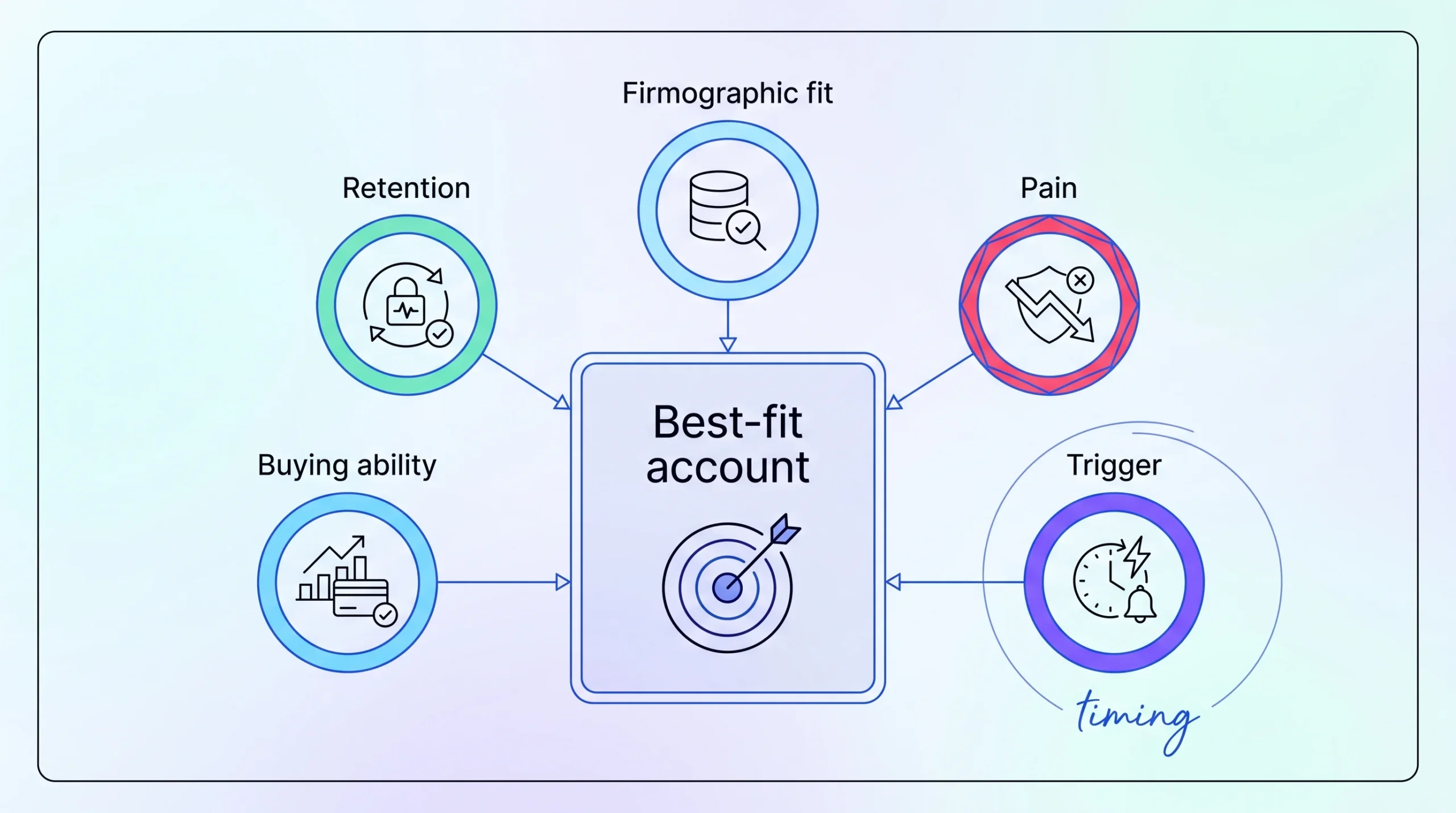
An ICP usually combines five filters.
First, firmographic fit: company size, industry, region, funding stage, revenue band, or team structure.
Second, operating pain: the account has a problem that is costly enough to create action.
Third, trigger or timing: something has changed, such as hiring, growth, churn, funding, tool migration, new regulation, or pipeline pressure.
Fourth, buying ability: the account has budget, authority, and a decision process that matches the product.
Fifth, expansion and retention potential: the customer can keep using the product and grow in value.
SaaS example
Imagine a SaaS company selling outbound data workflows. A broad ICP might say "B2B companies with sales teams." That is too wide to guide action.
A sharper ICP might be: Series A to C SaaS companies, 50 to 300 employees, outbound sales team in place, RevOps or growth owner responsible for pipeline quality, CRM data problems visible, and active hiring for SDR or sales ops roles.
That ICP gives the team a clearer positioning angle: less wasted outbound, cleaner account selection, and better sales action from signals. It also helps the SDR team avoid spending time on accounts that look big but are unlikely to buy now.
Common mistakes
The first mistake is building an ICP from who could use the product. Many accounts can use a product. Fewer accounts will buy it now and expand later.
The second mistake is making the ICP purely demographic. Company size and industry help, but pain, trigger, workflow, and buying process often matter more.
The third mistake is ignoring sales feedback. If account executives keep saying the same accounts stall, discount heavily, or churn early, the ICP needs to change.
How we see it
ICP is a prioritization tool. A good ICP helps the company say no faster, learn cleaner, and build a GTM motion around accounts that can actually become good customers.