SDR means sales development representative. An SDR is responsible for prospecting, qualifying accounts, starting conversations, and creating qualified meetings or opportunities for the sales team.
In SaaS, SDRs usually work near the top of the revenue motion. They research accounts, identify contacts, write outreach, respond to inbound interest, qualify fit, and pass qualified conversations to an account executive.
The role is often measured by meetings booked, qualified pipeline created, conversion rate, account quality, and handoff quality.
Why it matters
An SDR team can help a company reach the market before buyers are actively searching. That matters when the product is new, the category is early, or the company needs to test a specific ICP.
Good SDR work is not only sending messages. It is deciding which accounts deserve attention, finding the right person, connecting the message to a real business reason, and creating a sales conversation with enough context for the AE to continue.
For a startup, SDR work can also become a market-learning channel. Replies, objections, no-shows, disqualifications, and booked meetings all reveal whether the positioning is clear enough.
That feedback is most useful when it changes the next list, not only the next email, call script, or subject line.
How it works
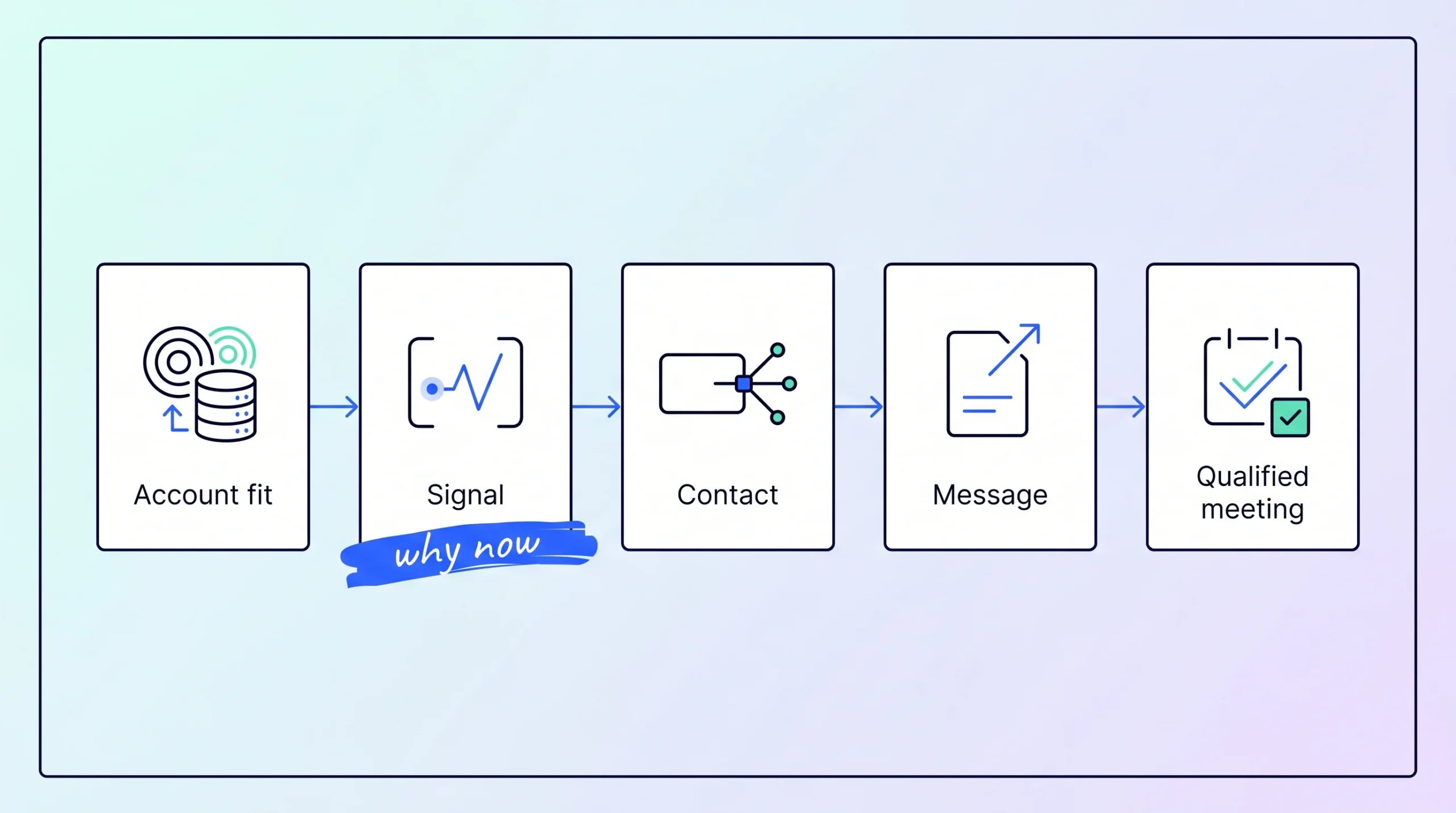
SDR work usually has five parts.
First, account selection. The SDR works from an ICP-based list instead of a random database pull.
Second, research. The SDR looks for signals such as hiring, funding, tool usage, website changes, leadership moves, or pain patterns.
Third, contact selection. The SDR finds the right buyer, user, champion, or influencer.
Fourth, outreach. The SDR writes or adapts a message that connects the product to the account's likely problem.
Fifth, qualification and handoff. The SDR confirms fit and passes clean notes to sales.
SaaS example
Imagine a SaaS company selling workflow automation for RevOps teams. A weak SDR motion sends the same message to every revenue leader.
A stronger SDR motion starts with companies showing clear signals: messy CRM growth, hiring for sales ops, expanding outbound headcount, or recently adding enrichment tools. The message can then speak to the likely pain: cleaner routing, less manual research, or better pipeline quality.
If the meeting converts into a real sales pipeline opportunity, the SDR motion teaches the team which signals are worth using again.
Common mistakes
The first mistake is measuring only meetings booked. Bad meetings create work for AEs and noise for leadership.
The second mistake is over-automating personalization. Buyers can usually tell when a message has a thin signal and no real point of view.
The third mistake is separating SDRs from GTM learning. SDR feedback should change lists, messaging, qualification, and sometimes the ICP itself.
How we see it
The best SDR motion is selective. It treats attention as expensive, uses signals carefully, and creates conversations that sales can actually advance.