Positioning is the way a product is framed in the mind of the right buyer. It explains what the product is, who it is for, what pain it solves, what alternatives it replaces, and why the buyer should care now.
In SaaS, positioning gives the market a clean mental shortcut. A buyer should be able to understand the category, the problem, the difference, and the outcome without decoding a pile of features.
Positioning is not a tagline. It is the foundation behind messaging, website copy, sales discovery, pricing, product packaging, and competitive comparison.
Why it matters
Weak positioning makes a good product harder to buy. The buyer cannot tell whether the product is a tool, platform, workflow, service, replacement, or add-on. Sales calls become education-heavy. Marketing copy becomes vague. Deals stall because the buyer cannot explain the value internally.
Strong positioning helps a team compete on clarity. It connects the product to a specific ICP, a painful job, a known alternative, and a believable outcome. It also makes a go-to-market strategy easier to execute because every channel can speak from the same market thesis.
It also gives sales and marketing a shared language, so the website, outbound, demo, and follow-up do not sound like four different companies.
How it works
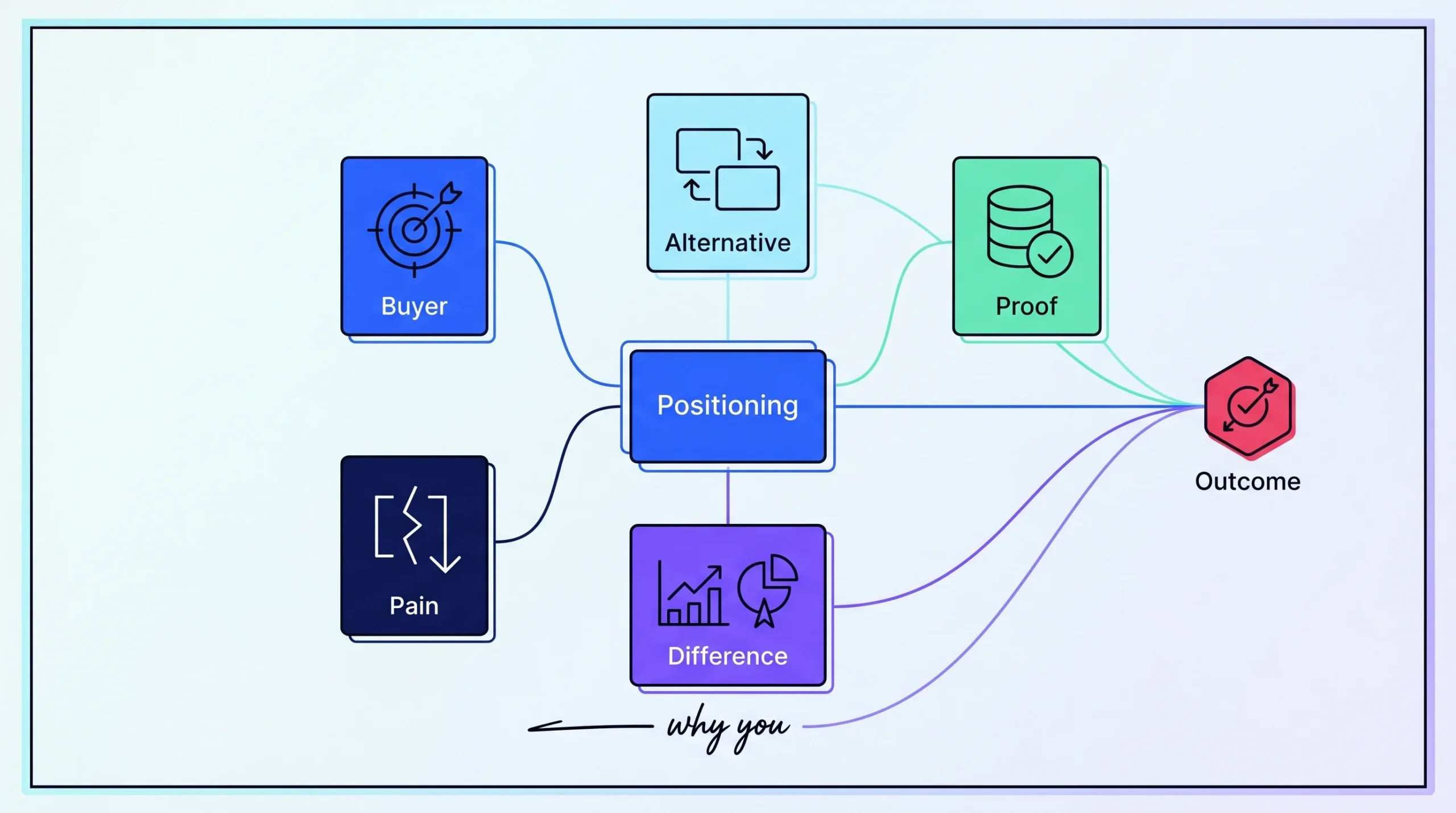
Good positioning usually answers five questions.
First, who is the buyer? The answer should be specific enough to shape examples and objections.
Second, what problem or job matters most? The product may solve many things, but positioning needs the lead pain.
Third, what is the buyer comparing against? Alternatives include competitors, spreadsheets, internal workflows, agencies, doing nothing, or hiring.
Fourth, what makes this product different in a way the buyer values?
Fifth, what proof makes the claim credible?
SaaS example
Imagine a startup that uses AI to summarize sales calls. A weak positioning line might be "AI-powered revenue intelligence for modern teams." That could mean too many things.
A sharper position might be: "Call review for lean sales teams that need faster rep coaching without adding another sales manager." This gives the buyer, the pain, the alternative, and the value. It also helps SDRs and account executives speak with the same logic.
The product can still have analytics, dashboards, and integrations. Positioning decides which meaning should lead.
Common mistakes
The first mistake is leading with features. Buyers care about features after they understand why the product exists for them.
The second mistake is trying to sound larger than the current wedge. Early companies often win by being specific before they become broad.
The third mistake is avoiding competitors. If the buyer already has a way to solve the problem, positioning must explain why changing behavior is worth it.
How we see it
Positioning should make the buyer feel recognized. The strongest version is rarely louder language. It is a cleaner connection between the buyer's current pain and the product's most believable promise inside the wider GTM motion.