
A GTM engineer is a technical revenue operator who builds the data, automation, and workflow systems behind a company's go-to-market motion. The role sits between RevOps, growth, sales, and engineering: it turns market signals, account data, and sales process into working systems that create or convert pipeline.
The title is still new, so teams use it in different ways. Some use it for Clay builders. Some use it for technical sales ops. Some use it for a hybrid seller who can build workflows and talk to customers. The useful way to think about a GTM engineer is through ownership: this person builds the systems that make GTM executable.
Clay has been one of the main companies shaping the category, and its 2026 explanation describes GTM engineering as the practice of building automated revenue systems with AI, data enrichment, and workflow automation. It also says the role now appears across RevOps, growth, and customer success workflows, not only outbound sales (Clay).
Our view is narrower and more useful for startups: a GTM engineer should not be hired to make a bad strategy look automated. The role works when the company has enough market clarity to build repeatable workflows around a real go-to-market strategy.
What a GTM engineer owns
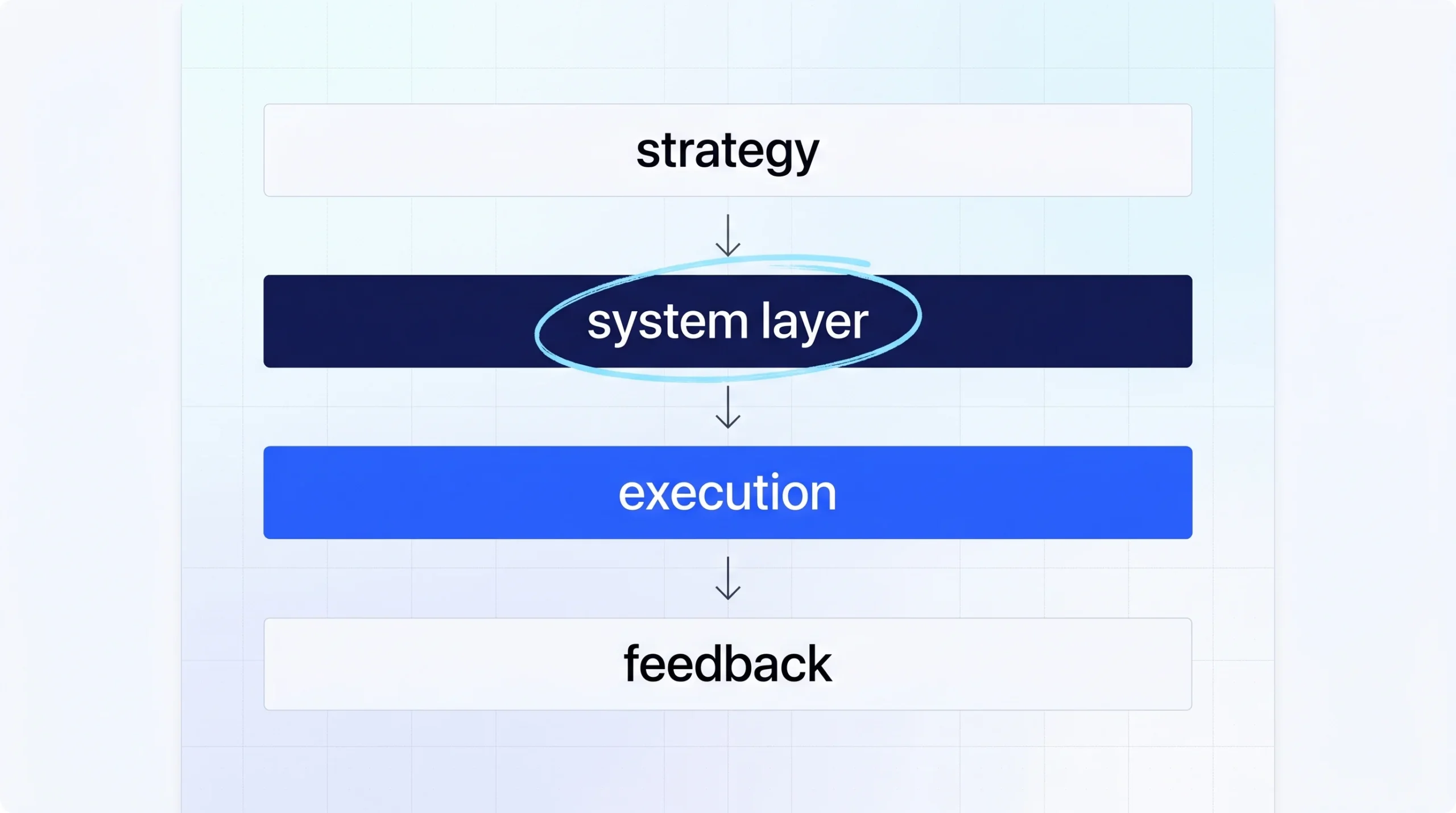
A GTM engineer owns the technical layer between target-account logic and revenue execution.
That usually includes account sourcing, enrichment, scoring, routing, CRM updates, outbound triggers, inbound qualification, campaign logic, and reporting loops.
The title can sound bigger than the job. It should not mean "the person who owns all GTM." It means the person who builds the systems that make a GTM motion faster, cleaner, and easier to learn from.
A strong GTM engineer can answer questions like:
- Which accounts match our ICP?
- Which signals should trigger sales action?
- Which data fields are needed before a rep touches an account?
- Which steps should be automated, reviewed, or handled by a human?
- Which workflow produced pipeline, and which one only produced activity?
The best work is rarely a single automation. It is a set of connected decisions. A signal means something only if the team knows which accounts matter. Enrichment helps only if it improves targeting or timing. Scoring helps only if it changes what the sales team does next.
How GTM engineering differs from nearby roles
GTM engineering overlaps with RevOps, SDR work, account executive work, and sales engineering. The overlap is real, but the center of gravity is different.
| Role | Main ownership | Where it overlaps with GTM engineering |
|---|---|---|
| GTM engineer | Builds revenue workflows, data logic, automations, and handoffs | Uses RevOps systems, supports sales workflows, tests growth plays |
| RevOps | Keeps the revenue stack, CRM process, reporting, and governance reliable | Provides the system foundation a GTM engineer builds on |
| SDR | Prospects, qualifies, and books meetings | Uses workflows a GTM engineer builds |
| Account executive | Runs deals, manages pipeline, and closes revenue | Gives feedback on account quality, messaging, and handoff rules |
| Sales engineer | Supports technical evaluation during deals | Helps with technical buyer questions and proof workflows |
| Growth engineer | Builds product or acquisition experiments | Shares experimentation skill, but often works closer to product |
The easiest mistake is to treat GTM engineering as a cooler name for RevOps. RevOps should create trust in the revenue system. A GTM engineer should create new revenue workflows on top of that system.
Another mistake is to treat the role as an SDR replacement. A GTM engineer can reduce manual prospecting, but the job is not "send more emails with AI." The job is to decide which accounts deserve action, what data is needed, which message fits the account, and when a human should step in.
A simple GTM engineer workflow
A useful GTM engineering workflow starts with a clear market question.
For example: "Which Series A SaaS companies are hiring their first RevOps leader and showing signs of outbound motion?"
From there, the GTM engineer builds the system:
- Define the account criteria.
- Pull accounts from approved data sources.
- Enrich company, contact, hiring, funding, product, and web signals.
- Score accounts based on fit and timing.
- Route the right accounts to the right motion.
- Push clean records into CRM and sales tools.
- Measure meetings, opportunities, replies, disqualifications, and deal quality.
- Use rep feedback to improve the workflow.
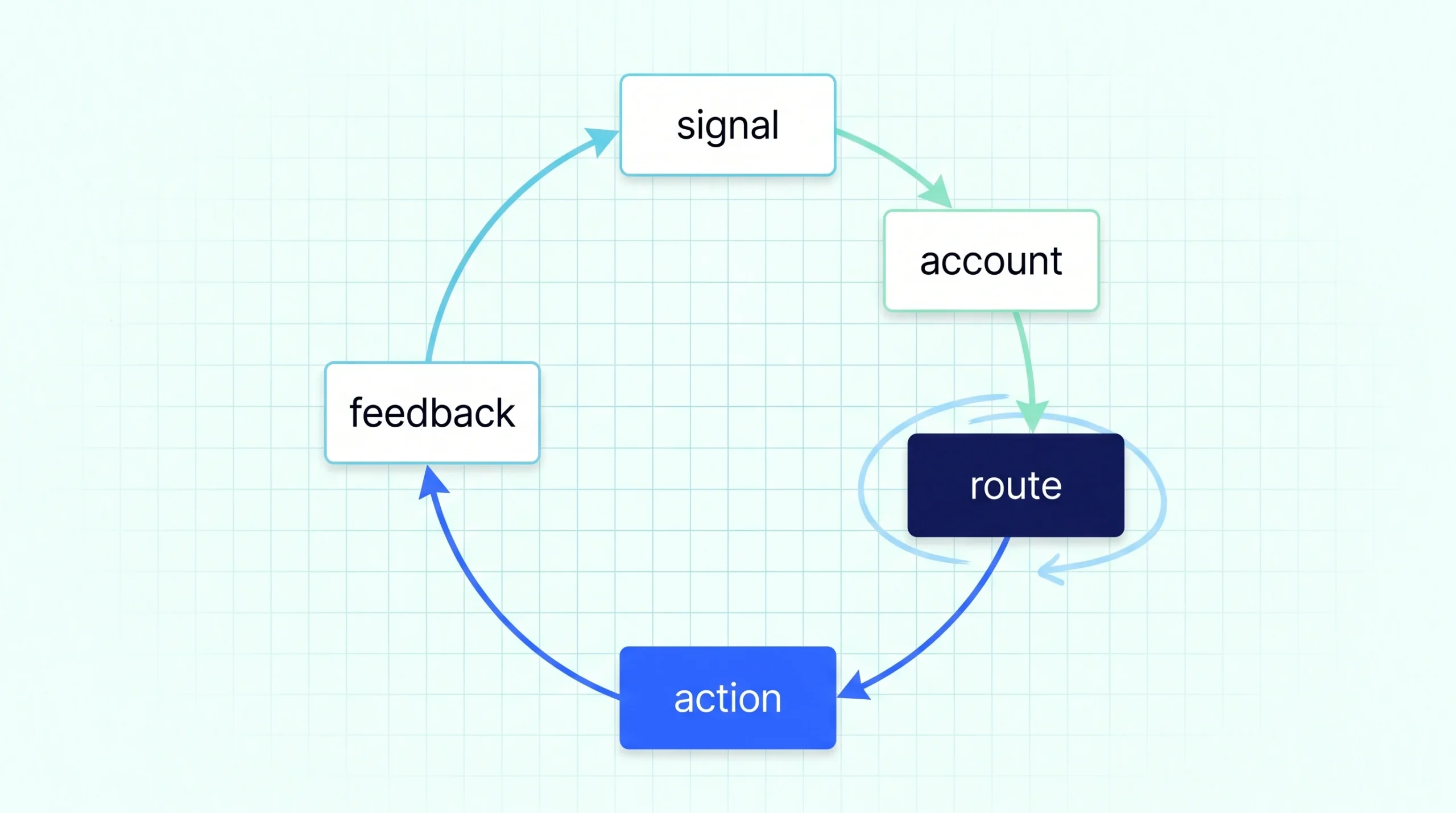
The role becomes valuable at this handoff. A regular outbound list gives sales more names. A GTM engineering workflow gives the team a repeatable way to decide who matters, why now, what to say, and what happened after the outreach.
That is also why signal-based selling is closely tied to GTM engineering. Signals are not magic. A job post, funding event, product launch, competitor complaint, technology change, or hiring pattern needs logic around it. The GTM engineer turns that logic into a workflow the team can run and improve.
Skills a GTM engineer needs
A GTM engineer does not need to be a traditional software engineer, but the role does require enough technical range to build, test, and debug workflows.
The skill set usually includes:
- Data thinking: account lists, fields, deduplication, segmentation, and scoring.
- Tool fluency: Clay, Apollo, CRM systems, sequencers, enrichment tools, spreadsheets, webhooks, and automation tools.
- API literacy: enough comfort to move data between systems and debug failed handoffs.
- GTM context: ICP, positioning, outbound, qualification, pipeline quality, and sales feedback.
- Experiment design: test one variable, define success, and read the results honestly.
- Copy and research discipline: use AI for research and drafting support without shipping generic personalization.
The stack usually groups around enrichment, automation, sequencing, CRM, and analytics. Tools change. The underlying skill is knowing how data should move from market signal to sales action.
For a startup, the strongest GTM engineer is usually not the person with the longest tool list. It is the person who can look at a target market, ask better questions, build a small workflow, ship it, read what happened, and improve it without turning the system into theater.
What do GTM engineers earn?
Salary data for GTM engineers is still inconsistent because the title covers different scopes. Some postings describe a no-code automation operator. Others describe a technical builder who owns APIs, CRM data architecture, lead routing, enrichment, and reporting.
That is why the published ranges vary. ZipRecruiter lists a US average near $94,573, a median wage around $91,500, and most roles between $78,000 and $108,500 (ZipRecruiter). SyncGTM cites a $127,500 posting median, a broad $100,000-$252,000 US span, and senior roles around $180,000-$252,000 (SyncGTM). Glassdoor reports a much higher US average around $186,804 and a typical range from $140,103 to $256,632, based on submitted salaries (Glassdoor).
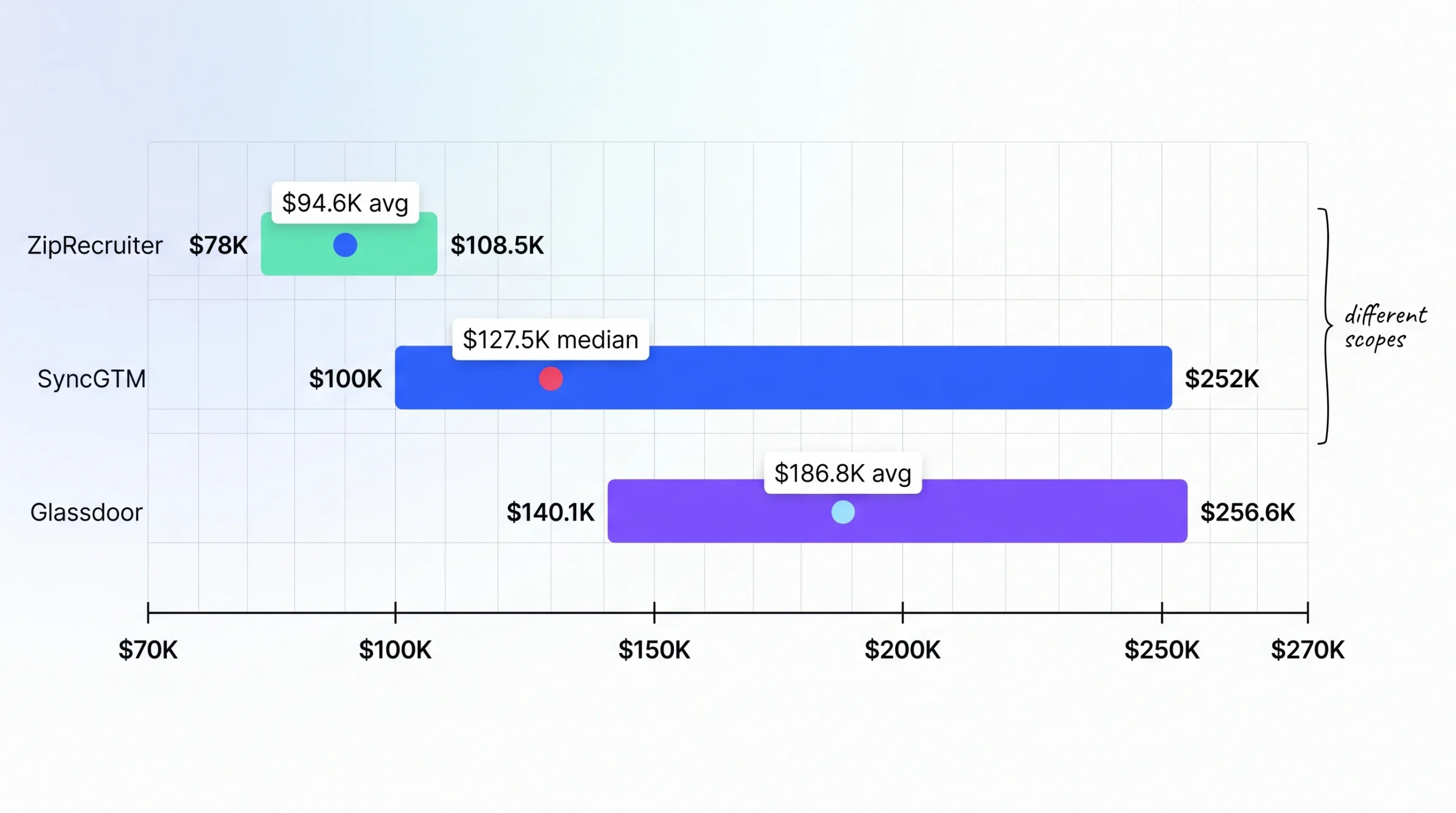
The practical read: a junior GTM automation role may price like sales ops. A senior GTM engineer who can build revenue infrastructure may price closer to engineering-grade compensation.
When should a startup hire a GTM engineer?
Hire a GTM engineer when the company has a motion worth systematizing.
Clay's hiring guide makes a similar point: hire once there are repeatable processes to systematize, not while the company is still finding product-market fit (Clay hiring guide).
That distinction is important. If the team does not know its ICP, does not know which problem it sells, and cannot tell whether a meeting is good or bad, a GTM engineer will build fast systems around weak inputs.
Good triggers for the role:
- The founder or sales lead has a working outbound or inbound motion.
- Reps are spending too much time researching and cleaning accounts.
- CRM data is unreliable enough to hurt routing or reporting.
- The team has clear segments but slow execution.
- There are signals worth acting on, but no workflow to capture them.
- The sales team needs better account quality, not only higher volume.
Bad triggers:
- "We need AI because everyone else is using it."
- "We need more meetings, any meetings."
- "Our strategy is unclear, so automation might fix it."
- "We bought too many tools and need someone to connect them."
Early founders can often act as the first GTM engineer. That does not mean writing code all day. It means owning the logic of the market, the account list, the signal, the workflow, and the feedback loop before handing the system to a specialist.
Common mistakes
The first mistake is over-automation. If every account receives AI-written outreach because it matched one weak signal, the workflow creates noise. A good GTM engineer knows which steps need human review.
The second mistake is tool-first thinking. Buying Clay, Apollo, HubSpot, n8n, or another tool does not create GTM engineering. The system starts with account logic and workflow design.
The third mistake is weak measurement. Open rates and reply rates can help, but they do not prove the workflow created good pipeline. A GTM engineer should track meeting quality, opportunity creation, disqualification reasons, conversion by segment, and sales feedback.
The fourth mistake is hiring too early. If the founder has not made enough sales calls to understand the market, a GTM engineer has too little truth to build from.
The fifth mistake is hiring too late. If reps are already stuck in manual research, CRM cleanup, and one-off account routing, the company may be wasting expensive sales time on work a system could handle.
FAQ
Is GTM engineer a real role?
Yes. It is still an emerging title, but the work is real. SaaS teams need people who can connect account data, AI workflows, CRM systems, sales tools, and revenue feedback. Some companies will call this GTM engineering, some will keep it inside RevOps, and some founders will own it until the motion is mature.
What does a GTM engineer do daily?
A GTM engineer builds and improves revenue workflows. Daily work can include account sourcing, enrichment setup, CRM field logic, outbound triggers, routing rules, AI research prompts, workflow QA, sales feedback review, and performance reporting. The work should tie back to pipeline quality.
Is a GTM engineer the same as RevOps?
No. RevOps keeps the revenue system reliable. GTM engineering builds new workflows that use that system. On a small team, one person may cover both. As the company grows, RevOps usually owns governance, while GTM engineering owns build-and-test workflows for growth, outbound, inbound, or expansion.
Does a GTM engineer replace SDRs?
Not by default. A GTM engineer can reduce manual SDR work by improving account selection, research, routing, and workflow logic. SDRs may still handle human review, conversation, qualification, and follow-up. The better frame is that GTM engineering changes what SDR work should focus on.
What should a startup learn before hiring one?
The startup should learn its ICP, strongest use case, best early segments, sales motion, and basic pipeline pattern. If those pieces are unclear, start with founder-led GTM before hiring a GTM engineer. If those pieces are working but slow, a GTM engineer can help turn the motion into a repeatable system.
How we see it
A GTM engineer is useful only when the company has enough market truth to build around.
The role is not a shortcut around strategy. It is the builder layer that makes strategy executable. The right person can turn account logic, signals, enrichment, CRM rules, sales feedback, and pipeline measurement into a system the team can learn from.
If you are still defining the market, read the guide to go-to-market strategy. If you already have the market shape and need cleaner execution, start mapping the workflows behind your SaaS sales funnel.
Until the starter kit is ready, join the newsletter for practical notes on GTM engineering, market clarity, and AI-native revenue workflows.