An account executive, often called an AE, is the sales role responsible for turning qualified opportunities into customers. In SaaS, the AE usually owns discovery, demo, stakeholder management, business case, negotiation, close plan, and handoff.
The AE typically receives qualified meetings from an SDR, inbound demand, partner referrals, or founder-led pipeline. From there, the AE works the deal through the sales pipeline.
The role is measured by quota attainment, win rate, deal quality, sales cycle, forecast accuracy, average contract value, and sometimes expansion or retention quality.
Why it matters
The AE sits at the point where market interest either becomes revenue or falls apart. A good AE does more than present the product. They diagnose pain, understand the buying process, create urgency, handle risk, align stakeholders, and help the buyer make a decision.
For startups, AE feedback is one of the best sources of market truth. If strong-fit accounts keep stalling, the problem may be positioning, pricing, product proof, onboarding risk, or the wrong ICP.
That is why AE notes should be treated as market data, not only sales administration.
How it works
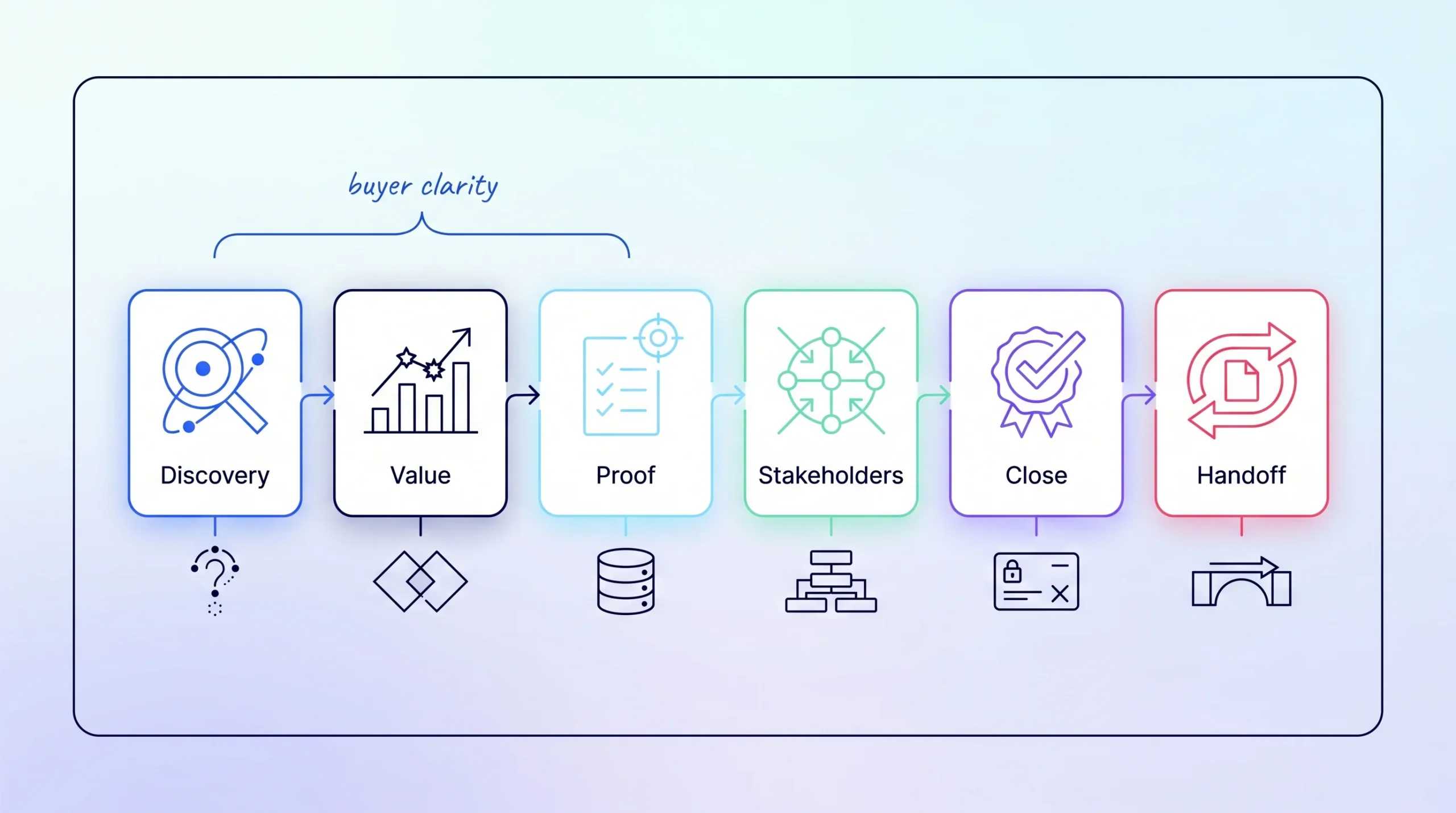
An AE usually owns five deal motions.
First, discovery. The AE learns the buyer's pain, current workflow, urgency, decision process, stakeholders, and success criteria.
Second, value framing. The AE connects the product to a business outcome the buyer cares about.
Third, proof. The AE uses demo, pilot, case study, data, or technical validation to reduce risk.
Fourth, stakeholder alignment. The AE helps the buyer bring in finance, legal, procurement, leadership, users, or technical teams when needed.
Fifth, close and handoff. The AE manages pricing, terms, signature, and the transition to onboarding or customer success.
SaaS example
Imagine an AE selling a sales intelligence platform. The buyer says they need better data. A weak AE gives a feature tour.
A stronger AE asks where bad data hurts the revenue motion: wasted outbound, low connect rates, poor routing, duplicate records, or missed expansion signals. The AE then frames the product around the buyer's business goal, such as cleaner outbound coverage or better account prioritization.
If the deal closes, RevOps needs clean fields, source data, handoff notes, and onboarding context so the customer does not start from scratch.
Common mistakes
The first mistake is demoing too early. A demo without discovery turns the product into a menu of features.
The second mistake is relying on one champion. Complex B2B deals often need several people to agree that the problem is worth solving.
The third mistake is hiding deal risk. A healthy GTM motion needs honest pipeline notes, not optimistic stage movement.
How we see it
An AE should make buying clearer. The best AEs do not push every account forward. They separate real pain from casual interest and help the right buyer make a confident decision.