A sales pipeline is the structured view of opportunities moving from qualification to closed-won or closed-lost. It shows which deals exist, where they are, who owns them, what needs to happen next, and how likely they are to turn into revenue.
In SaaS, a pipeline is more than a list of deals. It is a working model for managing sales execution, forecasting, coaching, handoffs, and GTM learning.
The pipeline usually sits in a CRM, but the CRM is not the pipeline. The real pipeline is the shared sales process behind the stages.
Why it matters
Without a clean sales pipeline, a company cannot tell whether growth is real or cosmetic. It may have many meetings, but weak qualification. It may have high pipeline value, but poor stage discipline. It may forecast revenue from deals that have no buyer urgency.
A useful pipeline helps account executives manage deals, helps leaders forecast, and helps RevOps spot where the motion is breaking. It also shows whether the ICP is producing the right kind of opportunities.
How it works
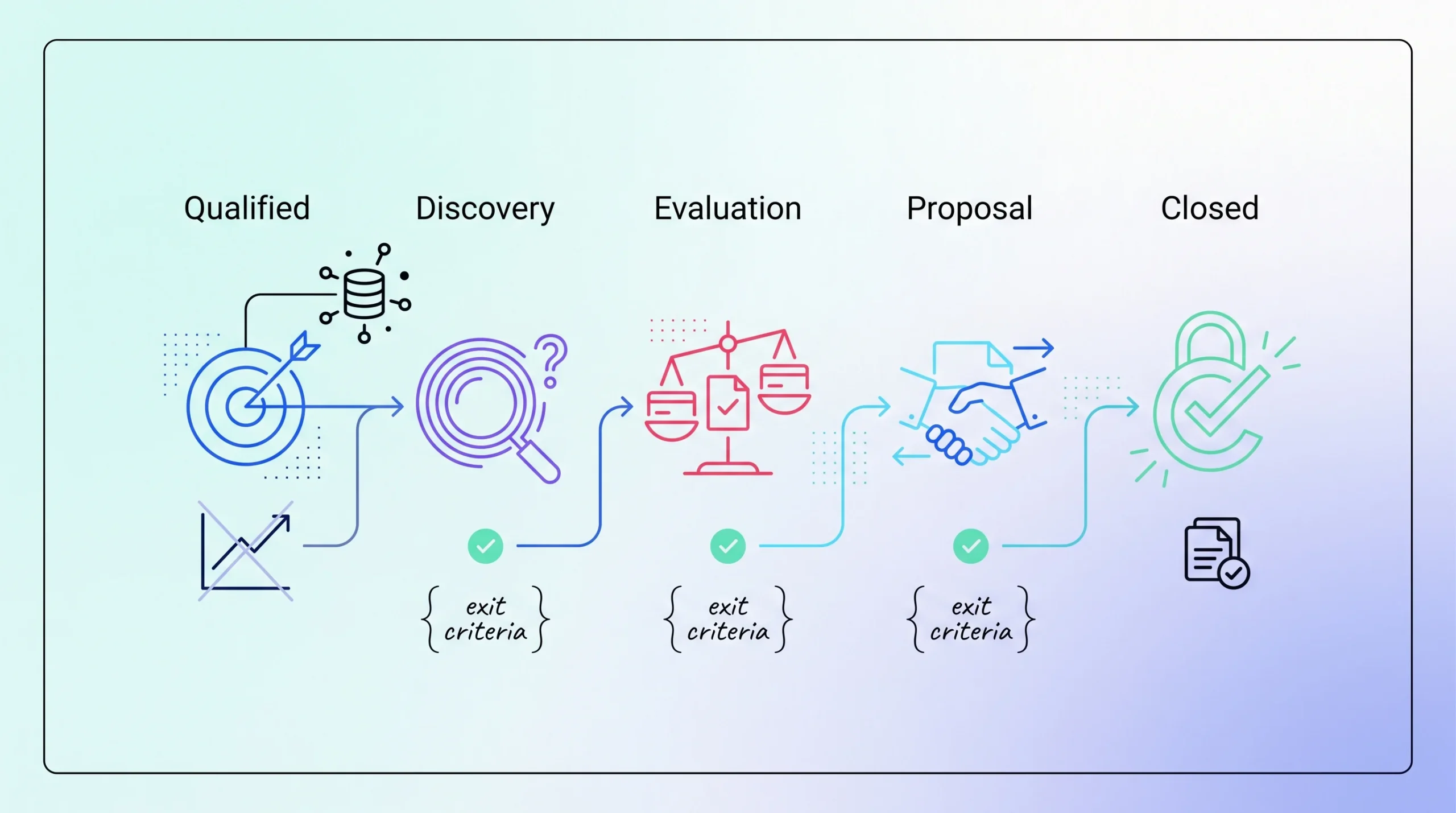
Most SaaS pipelines use stages such as qualified, discovery, evaluation, proposal, procurement, closed-won, and closed-lost. The names matter less than the exit criteria.
Each stage should answer:
- What buyer action has happened?
- What evidence moves the deal forward?
- What risk still exists?
- What is the next step?
- Who owns the next action?
The best pipelines are not built around seller optimism. They are built around buyer progress. A deal should not move stages because a rep feels good. It should move because the buyer has confirmed a problem, shared urgency, involved stakeholders, reviewed proof, or taken a clear next step.
SaaS example
Imagine an AE selling a data enrichment platform. A demo request comes from a RevOps manager. The deal should not jump straight to proposal because the buyer liked the demo.
The pipeline might move from qualified to discovery only after the team confirms CRM pain, outbound dependency, data quality issues, and a buying timeline. It might move to evaluation after the buyer agrees to test enrichment quality on a real account sample. It might move to proposal only when budget, stakeholders, and legal path are clear.
This stage discipline helps the SDR team learn which meetings become real opportunities and which leads only create activity.
Common mistakes
The first mistake is using too many stages. A complex pipeline can hide weak selling behind CRM administration.
The second mistake is missing exit criteria. Stage names without rules create unreliable forecasts.
The third mistake is measuring pipeline value without quality. A small pipeline with strong fit and urgency can be healthier than a large pipeline full of weak deals.
How we see it
A sales pipeline should make reality easier to see. The goal is not to make revenue look predictable. The goal is to expose where buyer momentum is real, where it is missing, and what the team should change next.